26.9.09

“Ukrainian president’s poisoning was falsified”


The evidence of the 2004 poisoning of the Ukrainian President was falsified by high-ranking officials and Viktor Yushchenko’s family members, a representative of Ukraine’s Prosecutor General’s Office has said.


The findings add yet another twist to the mysterious story that’s been puzzling many for five years.Larisa Cherednichenko, the head of the department for supervision of investigations into criminal cases of the Ukrainian Prosecutor General's Office, was working for the parliamentary commission looking into the circumstances surrounding the alleged poisoning.

Ukraine’s newspaper “Segodnya” (“Today”) writes on Saturday that in her report to the Prosecutor General Cherednichenko accused some officials from the presidential secretariat, led by the Ukrainian leader’s wife Kateryna, of being involved in the case. She said they tried to conceal the “artificiality” of the poisoning.

It all began during the presidential campaign of 2004 when Viktor Yushchenko suffered a serious decline in his heath. He was taken to a private clinic in Austria where doctors found dioxin – a poisonous chemical – in his body. A criminal investigation into the case was then launched.

By the time Yushchenko left hospital, his looks had changed dramatically. Pockmarks had appeared on his face and the upper part of his body.

Yushchenko insisted he was poisoned during a dinner with top officers from the Ukrainian security services near the capital Kiev on September 5, 2004. The Deputy Head of the Ukrainian Secret Services, whose residence was the venue for the meeting, fled the country soon afterwards. Nevertheless, he denied all allegations of poisoning the presidential candidate.

“Americans poisoned Youshenko’s blood”

Now Cherednichenko, citing the evidence of MP David Zhvania, who was at the dinner, says:


Ukraine, Kiev : Viktor Yushchenko on July ,06 2004 (h) after he received his presidential candidate certificate and (R) giving a press conference on October 29, 2004, two days before the presidential elections. (AFP Photo/ Anatoliy Medzyk / Sergei Supinsky)
“The victim had blood samples taken by an Austrian doctor in September-October 2004. However, the samples were not studied in Ukraine or any other European country.”

“The samples were secretly taken to the US, where they were enriched with dioxin and later, with the help of American special services, delivered to Austria,” Segodnya paper quotes Cherednichenko as writing in her report.

And it was exactly those blood samples that were sent by the administration of the Austrian clinic, Rudolfinerhaus, for the expert screening which discovered dioxin.

Zhvania, however, didn’t comments about the issue to the paper.

Special services’ operation?

Also, Cherednichenko mentioned a recording of a phone conversation between two people who called each other Roman and Marta. Speaking in English and occasionally using some Ukrainian words, those two were discussing the delivery of Yushchenko’s blood samples from the U.S. to Austria.

She claims the name “Marta” was a pseudonym and the poisoning was nothing but an operation planned and performed by Ukrainian and foreign special services.

The General Prosecutor’s office representative refused to name who was really hiding behind the “Marta” nickname. However, the gossip that appeared on the Internet shortly afterwards is that it was Kateryna Yushchenko.

“I was afraid of everything and everyone”

Commenting on the statement in an interview with the paper Ukraina Moloda, the president’s wife said that she was accused of being involved in Yushchenko poisoning case.

"I was accused of falsifying the test results and making the plan to help him win the elections," she said.

She said that in order to find out what the reason of her husband’s illness was, she had to ask for consultations in Europe and the U.S.

“I had to do it secretly… since I was afraid of everyone and everything. I remember that time as a nightmare,” she is quoted as saying.

Kateryna Yushchenko added that she was proud of her husband and believes he was a hero.

Report author to be dismissed

According to Segodnya newspaper, the day after writing her report, Cherednichenko was warned that she would be dismissed from her office due to staff reduction. She was offered two positions instead, which she refused. Cherednichenko appealed to the court over her dismissal.

She said, however, that she doesn’t regret writing the report.

It looks like the alleged poisoning story is far from over. Whether the new findings are true or not, the question that still remains is what really happened to the Ukrainian president and what caused dramatic changes in his appearance.

Student faces 10 years for tinkering with game consoles

A college student in Southern California may be convicted for up to 10 years in prison for messing with gaming consoles. He allegedly modified them to play pirated disks.


Vladimir Kremlev for RT. Click to enlarge.

Matthew Crippen, a 27-year-old student at the California State University, is accused of modifying Xbox, PlayStation 3 and Wii consoles in violation of the Digital Millennium Copyright Act, reports AP. He allegedly took fees for his services from console owners.

Agents of the Immigration and Customs Enforcement (ICE) arrested him after receiving a tip-off from the Entertainment Software Association.

On Monday, he was released on a $5,000 bail after appearing at a federal court, according to the US Attorney's Office.

Crippen was indicted on two counts and may spend up to 10 years behind bars if found guilty.(or get a well paid job in the Computer Security Department of some huge corporation)

4/5 (28 votes)

12345

rate this story

Europe to buy Africa’s sun

Europe to buy Africa’s sun

History books may have to reserve space for yet another example that with enough money and brainpower Europeans can have anything - even Africa’s sun.


Plans are being developed, under a project named Desertec, to place solar thermal plants in the Sahara desert in North Africa. Then, via high voltage direct current transmission, the resulting power is to be transported approximately 2000km and distributed throughout Europe.
“Within 6 hours, deserts receive more energy from the sun than humankind consumes within a year.”
This statement, credited to Dr. Gerhard Knies, is like a slogan for optimistic Europeans who believe they can benefit from another of Africa’s natural resources—solar power.

Russian Pancakes

Russian cuisine

Russian Pancakes

If anything, this is the true Russian food – dozens of varieties of pancakes (‘blin’ in Russian) are known across the country, yet the basic recipe is the same – milk, eggs, wheat flour. They are served with sour cream, honey, jam, fish, caviar, egg and rice filling, or any other stuffing. Here are a few of the most popular recipes that can be enjoyed as a separate dish or with the filling for your blin.

Olivier

Russian cuisine

Olivier

Ingredients

  • 5 average-size potatoes, boiled (do not peel before boiling)
  • 3 nice pickled cucumbers
  • 1 good carrot, boiled (do not peel before boiling)
  • 4 boiled eggs (those do not need pre-peeling for sure)
  • 1 onion
  • 1 big chicken breast baked in an oven (no spice, no salt)
  • Salt, pepper, mayonnaise

Cooking

Just cut every ingredient mentioned into small cubes (well, obviously, since we've touched upon the issue… peel eggs, potatoes, and carrots before you do this!), add pepper, salt, and plenty of mayonnaise. Mix well. This salad is the must-have dish on a Russian New Year table.

TIP:

When you cut pickles into a salad, do not forget to squeeze off all the unnecessary liquid.

Kirill Pokrovsky - Belgian Cookies

Kirill Pokrovsky - Belgian Cookies

25.9.09

Car(e)-free Sunday in Belgium

Car(e)-free Sunday in Belgium

32 towns and cities across the country banished cars and trucks from their streets for the day as part of the European Mobility Week.

By far the largest area to take part in the car-free Sunday was Greater Brussels, where motor vehicles were banned from the streets in an area covering 162 square kilometres.
Car-free Sunday got under way at 9am with the Brussels Regional Transport Minister Brigitte Grouwels and the Brussels Region Secretary of State responsible for cycling Bruno De Lille cycling from the Schuman roundabout in the European District to the Flageyplein in Elsene.

Cars, vans, and trucks were banished from Brussels' streets until 7pm on Sunday evening.

Only the emergency services, buses, public services vehicles, taxis and those with a special permit were allowed to drive on the capital's roads.

A 30km/h speed limit was imposed on vehicles which were allowed to take to the roads and public transport in Brussels was free of charge for the entire day.

Elsewhere, Belgian towns and cities including Antwerp, Bruges, Ghent and Mechelen were all free of traffic for the day.

Numerous cultural and educational activities were laid on to keep young and old entertain

Cinema: Arab-Israelis, Israeli-Arabs


Cinema: Arab-Israelis, Israeli-Arabs

Picturenose’s Gerald Loftus offers his thoughts on one of Cannes 2009’s Palme d’Or nominees…

The Time That Remains (2009)


Had Palestinian writer Raja Shehadeh (
Palestinian Walks) written the screenplay ofThe Time That Remains (2009), the dwindling time might refer to the chance to hike the hills of Palestine before the Israelis completely cover them in concrete. Or maybe the time remaining before Foreign Minister Avigdor Lieberman succeeds in expelling Arab-Israelis from the land of their birth.

But the title of Israeli-Arab director/screenwriter Elia Suleiman’s highly personal view of being an Arab in Israel may apply to family relations as much as Palestinian-Israeli relations, as in ‘appreciate your parents while they are still around’, the theme so touchingly sketched in the recent Japanese film
Aruitemo aruitemo (Still Walking, 2008). In Suleiman’s Nazareth of 1948 to the present, we see the Arab-Israeli conflict as experienced by and recounted to a boy growing up in a Palestinian family that has stayed on – in what has become part of Israel.

The Time That Remains (2009)© Studio / Produzent

When I first saw the film’s poster, I imagined that the little boy was getting a scolding from his father (it’s actually the school headmaster; little Elia, it seems, is developing a reputation as a political dissident). No, Suleiman’s father Fuad (actor Saleh Bakri dominates the first third of the film as the young resistance fighter) is portrayed as a strong, silent type, who is left for dead after his capture in the 1948 fighting, and who spends the rest of his life under a cloud of Israeli suspicion that he hasn’t abandoned his Palestinian nationalism.

We never see Suleiman-père old and frail. He’s the reliable go-to man for family and neighbours in a Nazareth left adrift, cut off from their cousins across the Green Line. At the local school, children sing patriotic songs (but for which country?) in Hebrew and Arabic
Though political themes are ever present (what honest film on the subject could avoid politics?),The Time That Remains is at times blackly comedic, and more than one reviewer (including Suleiman himself) has seen shades of Buster Keaton and Jacques Tati in the absurdity of Israeli-Jewish and Israeli-Arab relations.

The cinema in France where we saw the film distributed a very helpful flyer with a reprint from the Nouvel Observateur interview with Elia Suleiman, where he explains to Pascal Mérigeau that his novel view of the last sixty-plus years is his alone – and is not a documentary. We read that “at 17 years old, I was accused of being a Communist sympathizer, and had 24 hours to make up my mind”, which is how the young Suleiman ended up in London, which led to New York, which led to Paris… This episode is alluded to in the film, when we see a teenaged Elia getting caught up in the first ‘Land Day’ demonstrations to protest Israeli expropriation of its Arab citizens’ land.

For objective students of the Arab-Israel conflict,
The Time That Remainsshould stand up well to scrutiny. For connoisseurs of the absurd, the film will show a collection of war and post-war situations that could be fodder for Ari Folman, should Waltz With Bashir (2008) ever get a prequel.


In keeping with Suleiman’s ambivalence over matters of nationality, statelessness, and patriotism,
The Time That Remains was presented at Cannes 2009 as neither an Israeli nor a Palestinian film, but a product of France, Belgium, Italy, and the United Kingdom. Suleiman, the ‘present absentee’ Israeli/Palestinian/Expatriate and on-camera narrator of his own film, looks on silently at his life and gives us a rare look at the conflicted world of Arab-Israelis.

109 mins. In Hebrew, Arabic and English.

Shopping in Belgium

Shopping in Belgium

If you have just arrived in town, I want to take you on a shopping expedition to the best shops and bargains in Belgium, from supermarkets to antiques.

Shopping in Belgium is mostly a fulfilling experience with reasonable prices and a wide range of goods. Occasionally, however, you may be frustrated when trying to buy a specific item you've seen everywhere back home.

There are two main supermarket chains in Belgium: Delhaize and GB which is owned by the Carrefour group (the big out-of-town hyper-markets are branded with that name). These carry everything you'd expect, often with international sections. Both supermarkets also have an excellent range of wine at keen prices. Opening is usually Monday-Saturday from 8am-8pm, and until 9pm on Friday. Brico is Belgium's largest DIY and gardening chain. You can find anything for the house here.

Delhaize has the distinct edge on internet shopping and home delivery. Caddyhome stocks most of what you would find in the supermarket whilst Wineworld specialises in just that with an impressive selection of world wine delivered to your door.

When it comes to household goods, this is where frustration can set in. Most of the bigger furniture, textile, kitchen and bathroom shops are located outside city centres with poor public transport links. Inner city shops range from reasonably priced, awful-style to bank-breaking top designer with little range in between (although Habitat can be found in both Brussels and Antwerp). IKEA now has six stores in Belgium.

For electrical and white goods there are two main competitors, Vanden Borre and Krefel, both much of a muchness, but always worth comparing for special offers. For computers, television and hi-fi, Photo Hall is ubiquitous throughout Belgium with some excellent value monthly offers. FNAC (Brussels, Antwerp, Ghent and Liège) also has a stylish electrical department. At the top of the Inno department store in Brussels, the German mega-outfit Media Markt has taken possession of the whole fifth floor.Dutch chain Hema is good for modern, reasonably-priced homeware, including bedding, lighting, curtain tracks and kitchen equipment. Likewise Casa and Blokker, both of which sell small household items, garden furniture and crockery.


If it's antiques you're after, then go either to the Sablon in Brussels for the gaspingly expensive, or the more bric-a-brac rues Haute and Blaes and the decidedly downmarket flea market on Place du Jeu de Balle. In Antwerp, the area between the river and Nationalestraat - known as St-Andries - is packed with quirky brocante shops.

For department stores, you'll need to rely on the soulless - and often windowless - Inno. From perfumes to clothing, children's toys and household items, Inno has everything but charm. The sales are good though.

For books, Brussels is blessed with its own branch of Waterstone's where you can find a massive stock of English books, magazines and newspapers. Sterling Books is an excellent, independent shop which base prices on current exchange rates.


Shops are generally open Monday-Saturday, with many inner-city shops preferring a 10am opening. They are exceptionally open the two Sundays before Christmas and also New Year. Sales take place in January and July - dates are strictly government controlled.

Where to Look

Brussels
The main pedestrianised street is rue Neuve, a nightmare on Saturdays, but packed with chain fashion and household stores. At the Rogier end is the City 2 shopping mall with fashion and sports clothing stores, electrical shops, a GB and a FNAC on a floor all of its own. There is also an Inno department store.

The area around Louise is where to go for designer goods, be it clothing or furniture. The funky Flemish-dominated fashion boutiques are strung along rue Antoine Dansaert.

Antwerp
Antwerp also has a main pedestrianised drag, the famous Meir, leading from the station to the cathedral. The high-fashion district is around Nationalestraat, whilst funky young things head to Kammenstraat.

Ghent
The Veldstraat is where to find the chain stores as well as some antique shops. Also explore the streets around the Korenmarkt and Hoogpoort. More upmarket shops can be found in Bennesteeg.


Useful web sites

www.brico.be

www.caddyhome.be

www.delhaizewineworld.com

www.ikea.be

www.habitat.be

www.photohall.be

www.fnac.be

www.hema.be

www.waterstones.be

www.sterlingbooks.be

Imagining the school of the future

Imagining the school of the future

When David Willows asked children in his class to imagine the future they pictured a colourful place where schoolteachers would only be required to attend class in an emergency...


The idealism that inspired us to enter our profession, driven by a clear understanding of how we would make a difference to the future of our world, is little more than a forgotten dream, perhaps even considered a propaganda tool imposed upon us by those who want us to put up with lack of financial recognition and ever-increasing administrative demands.

In short, we no longer have the time or energy to consider the big picture. Our 20/20 vision has long gone and we suffer a form of short-sightedness, whereby we count ourselves lucky if we can just see as far as the end of term!

Their words, even today, are powerful enough to make me think.

I am particularly struck by the refreshing simplicity of the child’s perspective. Children do not have the critical awareness that comes with adulthood. They envision the future without any care for strategic business plans, external moderation or effective resource management. They are therefore free from the constraints that can so easily shatter our dreams and compromise our ideals. For the children in my class, in other words, the future of education was clear. It will be a more colourful, more efficient and more ‘virtual’ experience than is currently available, with the teacher taking a far less active role in the process of learning.

Wow. That’s cool!

How then would we answer this question of the future of education in the year 2050?


What will life be like in the year 2050?

With this central question, the children in my class of 10 year olds began to imagine an island that was both conceivable and based upon their dreams of a utopian society.

Having discussed amongst themselves the way this island would be governed, basic human rights for its citizens, transportation and other aspects of day-to-day life, they turned their attention to their vision of future education.

This was back in 2003 and this is what they said:

Schools in the year 2050 will be far more colourful than they are today. As far as reading is concerned, there will be a book that reads itself to you over and over again, helping you to memorize all the facts that you need to know. For maths, you will just need to learn how to use a calculator. And instead of helping the children, the teachers will learn with the children. Teachers will only need to be there in case of emergency.

Most of the schools will be free, but for well-known schools people on the island will have to pay. Children will learn at home as well. They will have computers to help them. However, they will not look like normal computers but will be the size of a book, making them very easy to take outside.

In the year 2050, everyone — including children — will possess a Comobile: a pocket-sized computer that is close to being a human being. A Comobile, being a virtual teacher, will give children two-hour lessons (on two subjects) and four pages of homework per day.

In thinking about this question, I am reminded of the notion of ‘second naivety’ as outlined in the writings of American theologian and philosopher, Paul Tillich.

According to Tillich, we understand our world from one of three perspectives. First, he suggests, we begin our lives with a ‘mythic-literal’ view of the things around us. We take everything at face value and are essentially naïve. Ours is a kind of fairy-tale existence whereby we project a ‘Disney-style’ landscape onto the future.

As we grow older, however, things change and the complexity of the world begins to impact upon the story of our lives. We begin to experience the pain and contingency of human existence and gradually we exchange our naivety for a more critical, even cynical, perspective on the world around us, fully aware of the brokenness of the ‘myth’ that once we held. We grow ever more aware of both sides of an argument. We begin to see shades of grey where once we could only see black and white.

As educators, those of us who are caught in this phase will think of future education only as a set of dilemmas, so complex that it is impossible to discern an emerging pattern amidst the unceasing presence of ‘ifs’ and ‘buts

Sadly, Tillich argues, many people never manage to move beyond this stage of development. But, he says, there is nevertheless the possibility that we will find a way to transcend the complexity and discover a ‘second naivety’ whereby we are able to re-envision the world. The goal of human understanding, in other words, is at once to be aware of the messiness, the complexity, the contingency and loose ends, and yet also be able to discern a pattern — a vision of the future — that drives us forward in hopeful expectation.

So how does this happen? How do we start to re-envision the future of education? Are we simply to lay to one side our critical understanding and in-depth project plans, exchanging them for simplistic visions of seamless, hi-tech, educational provision?

Another philosopher, Michael Polanyi, suggests a model that may be helpful to us in his consideration of ‘tacit knowledge’. To put it simply, Polanyi argues that we already know more than we think. We narrate what we can about our world, but in telling our story we are unconsciously (‘tacitly’) aware of the fact that there is always more to say, there is always another side to every story. This tacit, unarticulated, knowledge, he suggests, is what drives our search for new visions of the future which more adequately articulate the world in which we live. Moreover, he concludes, in all forms of human development, the critical moment is when we suddenly experience a paradigm-shift in our understanding that leads us to explain the world around us in a new and more truthful way.

Concerning education, then, imagining the future is not a flight of fancy into a technological dreamscape, but the struggle to articulate what we already know to be true. It involves taking all of our good practice, our experience and our knowledge and re-formulating our understanding into a story that better articulates the motivation and vision of our profession.
David Willows
David Willows is Director of External Relations at the International School of Brussels

Eighteen-year-old murders his daughter and her grandmother in Brussels

Eighteen-year-old murders his daughter and her grandmother in Brussels

The 18-year-old confessed to having killed his daughter and her grandmother in Sint Lambrechts Woluwe (Brussels). He was arrested in a park in Ostend on Monday.

The teenager, in a detention centre for his involvement in a robbery resulting in murder three years ago, was on leave Sunday to visit his daughter who was at her great grandmother's house.

An argument began and the 18-year-old father murdered his daughter and her great grandmother. He confessed to the two murders shortly after his arrest.

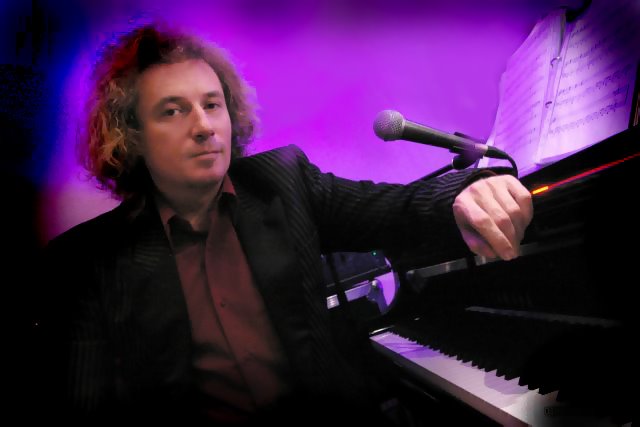
Three years ago the teenager, who was 15 at the time, was a member of the Black Wolves, a gang of youngsters with African roots. Together with another gang member he murdered the famous Brussels pianist Benjamin Rawitz, giving him fatal head wounds as they attempted to steal his car.

The young perpetrator was only arrested the beginning of last year and placed in a closed juvenile detention centre. In the meantime his girlfriend had a baby and the teenager was given visiting rights to see her and their daughter, who lived with the girl's grandmother.

The father had supervised visiting rights but had recently been allowed to visit his family without supervision. After a row on Sunday evening the man strangled his girlfriend's grandmother and his 1-year-old daughter.

He also tried to strangle his girlfriend, but she was able to escape. Sources say that the reason for the argument that led to murder was probably jealousy.

The 18-year-old fled after the family drama and was finally arrested in Ostend. He later confessed to the two murders.

His girlfriend is still in the hospital