25.9.09

Cinema: Arab-Israelis, Israeli-Arabs


Cinema: Arab-Israelis, Israeli-Arabs

Picturenose’s Gerald Loftus offers his thoughts on one of Cannes 2009’s Palme d’Or nominees…

The Time That Remains (2009)


Had Palestinian writer Raja Shehadeh (
Palestinian Walks) written the screenplay ofThe Time That Remains (2009), the dwindling time might refer to the chance to hike the hills of Palestine before the Israelis completely cover them in concrete. Or maybe the time remaining before Foreign Minister Avigdor Lieberman succeeds in expelling Arab-Israelis from the land of their birth.

But the title of Israeli-Arab director/screenwriter Elia Suleiman’s highly personal view of being an Arab in Israel may apply to family relations as much as Palestinian-Israeli relations, as in ‘appreciate your parents while they are still around’, the theme so touchingly sketched in the recent Japanese film
Aruitemo aruitemo (Still Walking, 2008). In Suleiman’s Nazareth of 1948 to the present, we see the Arab-Israeli conflict as experienced by and recounted to a boy growing up in a Palestinian family that has stayed on – in what has become part of Israel.

The Time That Remains (2009)© Studio / Produzent

When I first saw the film’s poster, I imagined that the little boy was getting a scolding from his father (it’s actually the school headmaster; little Elia, it seems, is developing a reputation as a political dissident). No, Suleiman’s father Fuad (actor Saleh Bakri dominates the first third of the film as the young resistance fighter) is portrayed as a strong, silent type, who is left for dead after his capture in the 1948 fighting, and who spends the rest of his life under a cloud of Israeli suspicion that he hasn’t abandoned his Palestinian nationalism.

We never see Suleiman-père old and frail. He’s the reliable go-to man for family and neighbours in a Nazareth left adrift, cut off from their cousins across the Green Line. At the local school, children sing patriotic songs (but for which country?) in Hebrew and Arabic
Though political themes are ever present (what honest film on the subject could avoid politics?),The Time That Remains is at times blackly comedic, and more than one reviewer (including Suleiman himself) has seen shades of Buster Keaton and Jacques Tati in the absurdity of Israeli-Jewish and Israeli-Arab relations.

The cinema in France where we saw the film distributed a very helpful flyer with a reprint from the Nouvel Observateur interview with Elia Suleiman, where he explains to Pascal Mérigeau that his novel view of the last sixty-plus years is his alone – and is not a documentary. We read that “at 17 years old, I was accused of being a Communist sympathizer, and had 24 hours to make up my mind”, which is how the young Suleiman ended up in London, which led to New York, which led to Paris… This episode is alluded to in the film, when we see a teenaged Elia getting caught up in the first ‘Land Day’ demonstrations to protest Israeli expropriation of its Arab citizens’ land.

For objective students of the Arab-Israel conflict,
The Time That Remainsshould stand up well to scrutiny. For connoisseurs of the absurd, the film will show a collection of war and post-war situations that could be fodder for Ari Folman, should Waltz With Bashir (2008) ever get a prequel.


In keeping with Suleiman’s ambivalence over matters of nationality, statelessness, and patriotism,
The Time That Remains was presented at Cannes 2009 as neither an Israeli nor a Palestinian film, but a product of France, Belgium, Italy, and the United Kingdom. Suleiman, the ‘present absentee’ Israeli/Palestinian/Expatriate and on-camera narrator of his own film, looks on silently at his life and gives us a rare look at the conflicted world of Arab-Israelis.

109 mins. In Hebrew, Arabic and English.

Shopping in Belgium

Shopping in Belgium

If you have just arrived in town, I want to take you on a shopping expedition to the best shops and bargains in Belgium, from supermarkets to antiques.

Shopping in Belgium is mostly a fulfilling experience with reasonable prices and a wide range of goods. Occasionally, however, you may be frustrated when trying to buy a specific item you've seen everywhere back home.

There are two main supermarket chains in Belgium: Delhaize and GB which is owned by the Carrefour group (the big out-of-town hyper-markets are branded with that name). These carry everything you'd expect, often with international sections. Both supermarkets also have an excellent range of wine at keen prices. Opening is usually Monday-Saturday from 8am-8pm, and until 9pm on Friday. Brico is Belgium's largest DIY and gardening chain. You can find anything for the house here.

Delhaize has the distinct edge on internet shopping and home delivery. Caddyhome stocks most of what you would find in the supermarket whilst Wineworld specialises in just that with an impressive selection of world wine delivered to your door.

When it comes to household goods, this is where frustration can set in. Most of the bigger furniture, textile, kitchen and bathroom shops are located outside city centres with poor public transport links. Inner city shops range from reasonably priced, awful-style to bank-breaking top designer with little range in between (although Habitat can be found in both Brussels and Antwerp). IKEA now has six stores in Belgium.

For electrical and white goods there are two main competitors, Vanden Borre and Krefel, both much of a muchness, but always worth comparing for special offers. For computers, television and hi-fi, Photo Hall is ubiquitous throughout Belgium with some excellent value monthly offers. FNAC (Brussels, Antwerp, Ghent and Liège) also has a stylish electrical department. At the top of the Inno department store in Brussels, the German mega-outfit Media Markt has taken possession of the whole fifth floor.Dutch chain Hema is good for modern, reasonably-priced homeware, including bedding, lighting, curtain tracks and kitchen equipment. Likewise Casa and Blokker, both of which sell small household items, garden furniture and crockery.


If it's antiques you're after, then go either to the Sablon in Brussels for the gaspingly expensive, or the more bric-a-brac rues Haute and Blaes and the decidedly downmarket flea market on Place du Jeu de Balle. In Antwerp, the area between the river and Nationalestraat - known as St-Andries - is packed with quirky brocante shops.

For department stores, you'll need to rely on the soulless - and often windowless - Inno. From perfumes to clothing, children's toys and household items, Inno has everything but charm. The sales are good though.

For books, Brussels is blessed with its own branch of Waterstone's where you can find a massive stock of English books, magazines and newspapers. Sterling Books is an excellent, independent shop which base prices on current exchange rates.


Shops are generally open Monday-Saturday, with many inner-city shops preferring a 10am opening. They are exceptionally open the two Sundays before Christmas and also New Year. Sales take place in January and July - dates are strictly government controlled.

Where to Look

Brussels
The main pedestrianised street is rue Neuve, a nightmare on Saturdays, but packed with chain fashion and household stores. At the Rogier end is the City 2 shopping mall with fashion and sports clothing stores, electrical shops, a GB and a FNAC on a floor all of its own. There is also an Inno department store.

The area around Louise is where to go for designer goods, be it clothing or furniture. The funky Flemish-dominated fashion boutiques are strung along rue Antoine Dansaert.

Antwerp
Antwerp also has a main pedestrianised drag, the famous Meir, leading from the station to the cathedral. The high-fashion district is around Nationalestraat, whilst funky young things head to Kammenstraat.

Ghent
The Veldstraat is where to find the chain stores as well as some antique shops. Also explore the streets around the Korenmarkt and Hoogpoort. More upmarket shops can be found in Bennesteeg.


Useful web sites

www.brico.be

www.caddyhome.be

www.delhaizewineworld.com

www.ikea.be

www.habitat.be

www.photohall.be

www.fnac.be

www.hema.be

www.waterstones.be

www.sterlingbooks.be

Imagining the school of the future

Imagining the school of the future

When David Willows asked children in his class to imagine the future they pictured a colourful place where schoolteachers would only be required to attend class in an emergency...


The idealism that inspired us to enter our profession, driven by a clear understanding of how we would make a difference to the future of our world, is little more than a forgotten dream, perhaps even considered a propaganda tool imposed upon us by those who want us to put up with lack of financial recognition and ever-increasing administrative demands.

In short, we no longer have the time or energy to consider the big picture. Our 20/20 vision has long gone and we suffer a form of short-sightedness, whereby we count ourselves lucky if we can just see as far as the end of term!

Their words, even today, are powerful enough to make me think.

I am particularly struck by the refreshing simplicity of the child’s perspective. Children do not have the critical awareness that comes with adulthood. They envision the future without any care for strategic business plans, external moderation or effective resource management. They are therefore free from the constraints that can so easily shatter our dreams and compromise our ideals. For the children in my class, in other words, the future of education was clear. It will be a more colourful, more efficient and more ‘virtual’ experience than is currently available, with the teacher taking a far less active role in the process of learning.

Wow. That’s cool!

How then would we answer this question of the future of education in the year 2050?


What will life be like in the year 2050?

With this central question, the children in my class of 10 year olds began to imagine an island that was both conceivable and based upon their dreams of a utopian society.

Having discussed amongst themselves the way this island would be governed, basic human rights for its citizens, transportation and other aspects of day-to-day life, they turned their attention to their vision of future education.

This was back in 2003 and this is what they said:

Schools in the year 2050 will be far more colourful than they are today. As far as reading is concerned, there will be a book that reads itself to you over and over again, helping you to memorize all the facts that you need to know. For maths, you will just need to learn how to use a calculator. And instead of helping the children, the teachers will learn with the children. Teachers will only need to be there in case of emergency.

Most of the schools will be free, but for well-known schools people on the island will have to pay. Children will learn at home as well. They will have computers to help them. However, they will not look like normal computers but will be the size of a book, making them very easy to take outside.

In the year 2050, everyone — including children — will possess a Comobile: a pocket-sized computer that is close to being a human being. A Comobile, being a virtual teacher, will give children two-hour lessons (on two subjects) and four pages of homework per day.

In thinking about this question, I am reminded of the notion of ‘second naivety’ as outlined in the writings of American theologian and philosopher, Paul Tillich.

According to Tillich, we understand our world from one of three perspectives. First, he suggests, we begin our lives with a ‘mythic-literal’ view of the things around us. We take everything at face value and are essentially naïve. Ours is a kind of fairy-tale existence whereby we project a ‘Disney-style’ landscape onto the future.

As we grow older, however, things change and the complexity of the world begins to impact upon the story of our lives. We begin to experience the pain and contingency of human existence and gradually we exchange our naivety for a more critical, even cynical, perspective on the world around us, fully aware of the brokenness of the ‘myth’ that once we held. We grow ever more aware of both sides of an argument. We begin to see shades of grey where once we could only see black and white.

As educators, those of us who are caught in this phase will think of future education only as a set of dilemmas, so complex that it is impossible to discern an emerging pattern amidst the unceasing presence of ‘ifs’ and ‘buts

Sadly, Tillich argues, many people never manage to move beyond this stage of development. But, he says, there is nevertheless the possibility that we will find a way to transcend the complexity and discover a ‘second naivety’ whereby we are able to re-envision the world. The goal of human understanding, in other words, is at once to be aware of the messiness, the complexity, the contingency and loose ends, and yet also be able to discern a pattern — a vision of the future — that drives us forward in hopeful expectation.

So how does this happen? How do we start to re-envision the future of education? Are we simply to lay to one side our critical understanding and in-depth project plans, exchanging them for simplistic visions of seamless, hi-tech, educational provision?

Another philosopher, Michael Polanyi, suggests a model that may be helpful to us in his consideration of ‘tacit knowledge’. To put it simply, Polanyi argues that we already know more than we think. We narrate what we can about our world, but in telling our story we are unconsciously (‘tacitly’) aware of the fact that there is always more to say, there is always another side to every story. This tacit, unarticulated, knowledge, he suggests, is what drives our search for new visions of the future which more adequately articulate the world in which we live. Moreover, he concludes, in all forms of human development, the critical moment is when we suddenly experience a paradigm-shift in our understanding that leads us to explain the world around us in a new and more truthful way.

Concerning education, then, imagining the future is not a flight of fancy into a technological dreamscape, but the struggle to articulate what we already know to be true. It involves taking all of our good practice, our experience and our knowledge and re-formulating our understanding into a story that better articulates the motivation and vision of our profession.
David Willows
David Willows is Director of External Relations at the International School of Brussels

Eighteen-year-old murders his daughter and her grandmother in Brussels

Eighteen-year-old murders his daughter and her grandmother in Brussels

The 18-year-old confessed to having killed his daughter and her grandmother in Sint Lambrechts Woluwe (Brussels). He was arrested in a park in Ostend on Monday.

The teenager, in a detention centre for his involvement in a robbery resulting in murder three years ago, was on leave Sunday to visit his daughter who was at her great grandmother's house.

An argument began and the 18-year-old father murdered his daughter and her great grandmother. He confessed to the two murders shortly after his arrest.

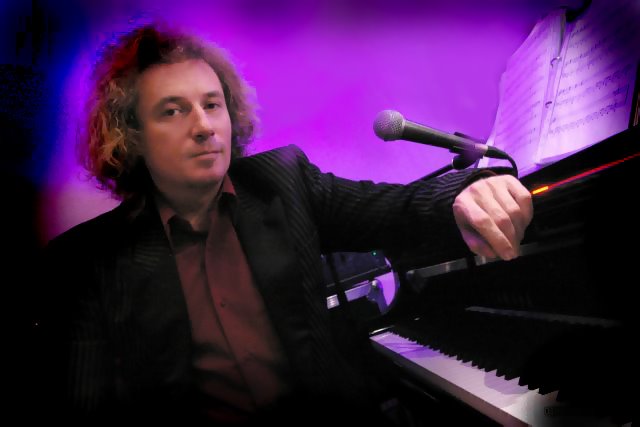
Three years ago the teenager, who was 15 at the time, was a member of the Black Wolves, a gang of youngsters with African roots. Together with another gang member he murdered the famous Brussels pianist Benjamin Rawitz, giving him fatal head wounds as they attempted to steal his car.

The young perpetrator was only arrested the beginning of last year and placed in a closed juvenile detention centre. In the meantime his girlfriend had a baby and the teenager was given visiting rights to see her and their daughter, who lived with the girl's grandmother.

The father had supervised visiting rights but had recently been allowed to visit his family without supervision. After a row on Sunday evening the man strangled his girlfriend's grandmother and his 1-year-old daughter.

He also tried to strangle his girlfriend, but she was able to escape. Sources say that the reason for the argument that led to murder was probably jealousy.

The 18-year-old fled after the family drama and was finally arrested in Ostend. He later confessed to the two murders.

His girlfriend is still in the hospital

24.9.09

Are Rusian tourists - the worst tourists in the world?

Vacationers from Russia led antireyting of the worst tourists, drawn up by the British tourism website Real Holiday Reports, "The Sun" wrote on Thursday.

the Germans invariably were leading earlier in this survey, The current survey polled more than 1000 residents of the UK who already had time this year to go on summer vacation.
The most repulsive qualities of tourists from Russia shocked the British, carried the following features of their behavior:-

Russians "privatizing" beach loungers, taking them at night to his room.

Tourists from Russia were constantly with a pack of money, behave arrogantly and mistreat the staff of the hotel in which they live.

Loudly swear and burp in bars and swimming pools.

Dress up as gangsters, are in a lot of gold, often appear in training suits.


"Kursk".The submorine

"Kursk".The submarine .As time goes by, it seams that the tragic accident in the Barrens see on saturday august 12 2001, during military exercise was an event much more delicate and sophisticated as we had learned before.
If the power stand - down, between Russia , USA and involvement of China could brake to III World war?
Top - secret military technologies ( namely infamous and unique Russian super-fast "Sckval" torpedoes ) and espionage intelligence on highest levels were clearly involved.
Presence of foreign intelligence forces and 2 American submarines, "shadowing" "Kursk" is revealed.
(collision or even a strike)
Were more than hungered of young man cruelly sacrificed to seal the state secrets ?
Or it's the political maturity and the responsibility of Russian president V.Putin prevented the major international crisis and instability inside of Russia ?.
If so , he deserves a grate credit for acting in this manner, despite the tragic loss of lives.
After all,- the sad heritage of "cold war" it there to blame.

or watch it "inbedded" in a blog.


23.9.09

Zeitgeist, The Movie - Remastered / Final Edition

Watch it, take some time, you will thank me for this..

Russians: (Not) in the mood for love


Moscow -- as the global crisis has officially arrived in Russia: in the country of Pushkin and Tolstoy, fewer men and women admit they are in love this year and only one in five are dating.

A poll released on Wednesday said only 45 percent of Russians said they were now in love, as Russia reels from a double blow of a full-scale demographic crisis and the global financial hardships.


Russians: (Not) in the mood for love

In hard times, only 45 percent of Russians, the country of Pushkin and Tolstoy, believe they are in love

By comparison, at least 53 percent of Russians said they experienced feelings of love in the economic boom years from 2003 to 2007, said the poll. The Russian Center for the Study of Public Opinion (VTsIOM) carried out the poll.

"Compared to the pre-crisis period, we see a considerable drop in the amount of Russians who believe they are in love," said Olga Kamenchuk, a VTsIOM spokeswoman. "Unfortunately, people began thinking about love considerably less."

Forty-eight percent of respondents said they were not in the mood for love, up from 35 percent in 2008.

With the ruble losing a third of its value since November and job losses kicking in, few appear to be willing to splurge on dates.

Just roughly one in five Russians currently date, with coffee shops and movies being the most popular places to meet.

But most Russians -- 59 percent -- say they believe in love at first sight, confirming their reputation as a romantic nation. Russians are so romantic, in fact, that 15 percent said that feeling rules the world (up from 11 percent in 2007).

Yet while the crisis may be sending shock waves across the society, one thing remains unchanged: gentlemen -- at least in Russia -- still prefer blondes, the study said. Russian women, by contrast, are into dark-haired men

World’s best quality of living still in Europe

World’s best quality of living still in Europe

In a recent survey of quality of life, mainland European cities won most of the top spots, while many Eastern European cities improved their rankings.

Mainland European cities are once again the most desirable places to live in the world, according to a quality of living survey published Tuesday.

Thirteen of the top 20 cities in which to live and work are on the continent, including Zurich, Geneva, Munich, Frankfurt, Amsterdam, Brussels and Berlin, according to the international consulting company Mercer.

The rankings are generated based on a number of factors, including political stability, economic environment, socio-cultural conditions, educational standards, public services, housing and the availability of entertainment.

The city of cafés and opera houses, Vienna, topped the list, pushing last year’s winner, Zurich, into second spot. Vienna’s rise was mainly due to improvements in Austria’s political and social environment, Mercer said.

The rest of the top 10 rankings were mainly dominated by German and Swiss cities, most of them retaining last year’s position and score.

One of the significant changes in the rankings happened in Eastern Europe, where many cities’ quality of living climbed due to increased stability, rising living standards and the greater availability of international consumer goods. Ljubljana in Slovenia, for example, moved up four places to 78th position while Bratislava moved up three places to 88th.

Beyond Europe, Canadian cities still dominate the top rankings of North American cities, with Vancouver clinching the highest spot at 4th.

The most desirable American cities were Honolulu at 29th, with San Francisco and Boston following it in positions 30th and 35th respectively.

For the first time ever, Mercer also ranked cities’ infrastructure. In this list, Singapore scored the highest followed by Munich in second place and Copenhagen in third.

Noting that German cities faired particularly well on the city infrastructure index, Slagin Parakatil, senior researcher at Mercer, said: “German city infrastructure is among the best in the world, in part due to its first class airport facilities and connections to other international destinations.”

The infrastructure index was created based on ratings of electricity and water supply, telephone and mail services, public transportation, traffic congestion and the range of international flights from local airports

Published at a moment when many international companies are trying to figure out how to cut costs, Mercer’s quality of living survey is designed to help governments and companies place a financial value on moving workers from one country to another. Based on differences between quality of living between their home and host locations, companies can then compensate expatriates.

Currently, however, many companies are looking to have their employees stay safely at home.

“As a result of the current financial crisis, multinationals are looking to review their international assignment policies with a view to cutting costs,” said Parakatil. “Many companies plan to reduce the number of medium to long-term international assignments and localise their expatriate compensation packages where possible.”

Top 10 cities for quality of living in 2009:
1. Vienna, Austria
2. Zurich, Switzerland
3. Geneva, Switzerland
4. Vancouver, Canada
5. Auckland, New Zealand
6. Düsseldorf, Germany
7. Munich, Germany
8. Frankfurt, Germany
9. Bern, Switzerland
10. Sydney, Australia

To see more of Mercer’s rankings, visit:
http://www.mercer.com/qualityofliving

Belgian bathing water "needs to be cleaner"

Belgian bathing water "needs to be cleaner"

Figures from the European Environment Agency show that the waters along the Belgian coast are the most polluted in Western Europe.

In Europe as a whole the situation is only worse in Romania.

Last week the European Environment Agency confirmed that all bathing waters along the Belgian coast attained the international norms. If the norms are tightened up only 34 of the 40 resorts on the Belgian coast will meet the norm.

A new norm is set to be introduced in 2015. Belgium will have to make an effort to reach the new target.

The Flemish Environment Company blames the large number of rivers and waterways that flow into the North Sea from Belgium for the problem.

The company also points to the lack of nature areas along the coastline.

Mie Van den Kerckhove of the Flemish Environment Company says there is no reason for panic: "We reach the minimum norm that guarantees the health of our bathers, Belgians and visitors alike."

flandersnews.be

56 face tattoos media hype


56 face tattoos media hype

The story surrounding the 18-year-old Belgian woman with 56 stars tattooed on her face has become a media hype.

A talk show in the United Kingdom offered the woman 30,000 euros for an interview but she turned it down, partly because she only speaks Flemish. In an interview with a Belgian newspaper, she expressed her desire to be out of the spotlight.

The stars were tattooed on her face on Sunday. The woman says she actually only asked for three stars and not 56. She allegedly fell asleep while being tattooed and it wasn't until she woke up that she realised what had happened. The man who tattooed her has offered to pay for the cost of removing the extra stars from her face.
Rouslan Toumaniantz, the tattoo artist, must pay EUR 3,000 for the girl to have her tattoos surgically removed.

Vlaeminck is expected to have her first removal session in the next few days.

According to Karel van der Linde, who will remove all 56 of the stars, the process should take between 6 to 8 sessions of half an hour each. Kimberley will be put under a local anaesthetic each time.

It is necessary to wait at least a month between each treatment in order for the skin to heal, and after each session Kimberley will have to wear dressing on her face for 48 hours.

Karel van der Linde expects Kimberley to have her old face back by next Easter.

Radio Netherlands/

22.9.09

"Na -na- na -na -na -na"

"Russia ranks amongst the world’s top oil, gas and coal producers, with reserves of all which most of the rest of the world would envy. But it has a downside. Russia is one of the world most inefficient users of energy, and with the world increasingly looking to promote renewable energy, it means that Russia’s renewable energy sector hasn’t been as prominent as those elsewhere.
Russian Premier Vladimir Putin says research shows that Russia has enough oil and gas for itself and for Europe for the next 100 years.

We have enough energy resources to meet our own growing demands as well as the demands of our European consumers for at least another hundred years. I am saying this with full responsibility based on serious research,” said Russian Prime Minister Vladimir Putin at a news conference following talks with his Hungarian counterpart Ferenc Gyurcsany.

The CIA World Factbook estimates Russia’s oil deposits at 79 billion barrels and natural gas at 44.65 trillion cubic meters.

Europe imports a quarter of its energy resources from Russia, the share of Russian gas making up 42 per cent of all natural gas consumed in Europe.

Russia’s main gas producer Gazprom is currently building the South Stream and Nord Stream gas pipelines to increase supplies to Europe. Once finished, the two pipelines will satisfy approximately 16 per cent of Europe’s gas needs."

And this is ,what nobody want to tell you.-

Peak oil (click on it to learn more)


The public and many governments appeared to be oblivious to the fact that the oil on which modern civilisation depends is running out far faster than previously predicted and that global production is likely to peak in about 10 years – at least a decade earlier than most governments had estimated.

peak_oil2.jpg

Afghan double-crosser enrages Russian tourists


Three Russian hitchhikers Nina Vershinina, Andrey Likhobabin and Dmitry Popov got acquainted in an Afghan embassy in Tajikistan and decided to “pay an amicable visit to the Central Asian state” togetherA greedy Afghan driver has spoiled the journey of three Russians crisscrossing Central Asia, RIA Novosti news agency reports.“We’ve been involved in an unpleasant story. We unambiguously came to terms with him, he understood us. What he did later was simply cheating,” said Likhobabin before adding: “It’s the principle of the matter, not the money. We aren’t homeless and we aren’t poor, we just prefer to travel this way.”

Though the tourists were almost run out of money, in the end they were obliged to pay a nominal $14 each, which they did, and not with the help of a third party either.

When the “road conflict” was settled, the travelers went on another tour, but no one can guarantee that it is the last time the adrenalin seekers will get into such a situation. When asked how the idea of hitchhiking in war-torn Afghanistan came into his mind, Likhobabin responded: “We think of such things all the time.”

LOL !!! (dr.KeyReal.)

Legendary Soviet undercover agent Elizaveta Mukasey

Legendary Soviet undercover agent Elizaveta Mukasey died in Moscow at the age of 97 following a heart attack. She had been working for the country’s foreign intelligence for over half a century.Elizaveta Mukasey was born in Ufa (now the capital of the Russian Republic of Bashkortostan) in 1912. Escaping the hunger and devastation of the Bolshevik Revolution period, her family moved to Uzbekistan and after finishing school she entered university in Leningrad (now St. Petersburg) and graduated from the biological faculty.

It was in Leningrad that she met her future husband, Mikhail Mukasey. In 1937, after graduating from the Oriental Faculty of Leningrad University, he was ordered to the intelligence school and in 1939, already having two children, the couple was sent to fulfill their first mission, in Los Angeles.

Under the cover of a vice consul, Mikhail was fishing for information with Elizaveta’s help. They had wide connections and many of their acquaintances were sharing important information with them, not in the least suspicious that the husband and wife were spies.

It was their sources that confirmed Richard Zorge’s famous intelligence on Japan deciding not to enter the war against the Soviet Union.

Many Hollywood stars and artists were close associates of theirs, says argumenti.ru, such as Charlie Chaplin, Mary Pickford, Douglas Fairbanks, Theodore Dreiser and Walt Disney.

Despite being very small at the time, their son Anatoly memorized “Uncle” Charlie Chaplin.

“My father taught Chaplin to drink Russian vodka,”
Anatoly Mukasey said in an interview with Izvestia newspaper. “And I will never forget I was playing with drunk Uncle Theodore under the table covered with large cloth after supper. With Theodore Dreiser, I mean.”


Elizaveta Mukasey

To neighbors and the local intelligence services, though, Elizaveta was just a common housewife.

“They saw I was hoovering carpets, and the vacuum cleaner’s cable was 12 meters long. In reality this cable was also our aerial wire, and it was connecting us with Moscow,” Elizaveta Mukasey once said, as quoted by the Russian Vesti TV channel.

In 1943 the couple returned to the Soviet Union, where Mikhail was preparing personnel in a special intelligence school in Moscow and Elizaveta worked as a secretary at one of the capital’s major theaters.

There she studied the Stanislavsky method and then started learning the German and Polish languages. She also learned to use a portable radio transmitter, which was necessary for her future work.

From 1955 to 1977 the couple again worked abroad, with Elizaveta serving as radio operator for the spy network and maintaining two-way radio contact with headquarters in the Soviet Union.

During those 22 years, Mikhail and Elizaveta aka “Zefir” and “Elza,” fulfilled missions in many European countries and never failed. Afterward they returned home and devoted themselves to training young undercover agents.

Lieutenant Colonel Elizaveta Mukasey was the author of many manuals and exercise books for intelligence schools, and earned many awards for her remarkable contribution to the safeguarding of the security of Russia.

Her husband Mikhail died last year at the age of 101.

After the mandatory stature of limitations expired on revealing their activities, some details about the couple’s works were publicized in a book titled “Zefir and Elza: Undercover Agents". Much about their life, however, remains a secret.

4.2/5 (12 votes)

"EUR 21 million of Belgian money spent on phone tapping in 2008

The justice department devoted EUR 21 million to listening to telephone conversations last year.

Phone tapping is one of the most effective ways of dismantling rebel groups, fighting against drug trafficking and terrorism, and keeping an eye on extremist personalities,"

-It's not too expancive, compare to the fun of listening to some "extremist personalities:)" Dr.KeyReal.